A Different Proposition to the South
Couples who consider Barcelona for an Indian wedding are usually after something distinct from the Andalusian hacienda. Catalonia offers a major European city with genuine architectural character, a coastline that runs from the Maresme up to the Costa Brava, and wine country an hour inland. For families who want their guests to have a real holiday either side of the celebration, and who like the idea of a city base rather than a resort, it is a compelling alternative.
Access and Guest Logistics
Barcelona-El Prat is one of the best-connected airports in southern Europe, with direct routes from across the United Kingdom, the rest of Europe and a number of long-haul destinations. For a guest list drawn from London, Dubai and North America, that breadth of connection is a practical advantage, and it reduces the number of families who have to connect through Madrid. The city also has the hotel capacity to absorb a large wedding party without scattering guests across a dozen properties, and a public transport network that gives guests independence on their free days.
The Catalan Venue Landscape
The region's venues divide into four broad families, each with its own trade-offs:
- Masies — traditional Catalan farmhouses, many of them restored estates in the Penedès or the Vallès, with the stone-and-courtyard character that photographs beautifully.
- Vineyard and winery estates — Penedès and Priorat properties that offer a strong sense of place and generous outdoor space.
- Coastal properties — from the Maresme just north of the city up to the Costa Brava, with sea views and a more relaxed register.
- City venues — historic buildings, rooftop terraces and hotel ballrooms for couples who want the celebration to stay in Barcelona itself.

What to Check Before You Commit
Catalan venues tend to be smaller in footprint than the great Andalusian haciendas, which is the single most important thing to verify if your guest list runs past two hundred. A masie that is perfect for a hundred and twenty may not hold a mandap, a dance floor and a seated dinner for three hundred without compromising one of them. Alongside capacity, there are three questions worth asking at the site visit:
- What are the noise restrictions and the hard finish time? Sangeet evenings run late and municipal limits vary considerably across Catalonia.
- What kitchen infrastructure exists, and what power is available for a mobile kitchen if it does not?
- Is there a wet-weather alternative that still works for the ceremony? Spring in Catalonia is less reliably dry than the south.
Climate and Season
Catalonia's season differs from Andalusia's in ways that affect planning. Summers are hot but generally less extreme than inland Andalusia, and the coastal humidity is higher. Late spring, from May into June, and early autumn, through September, are the most comfortable windows for multi-day celebrations with outdoor ceremonies. Spring carries a somewhat higher chance of rain than the south, which makes a credible covered option a requirement rather than a nicety.
The Ceremony Itself
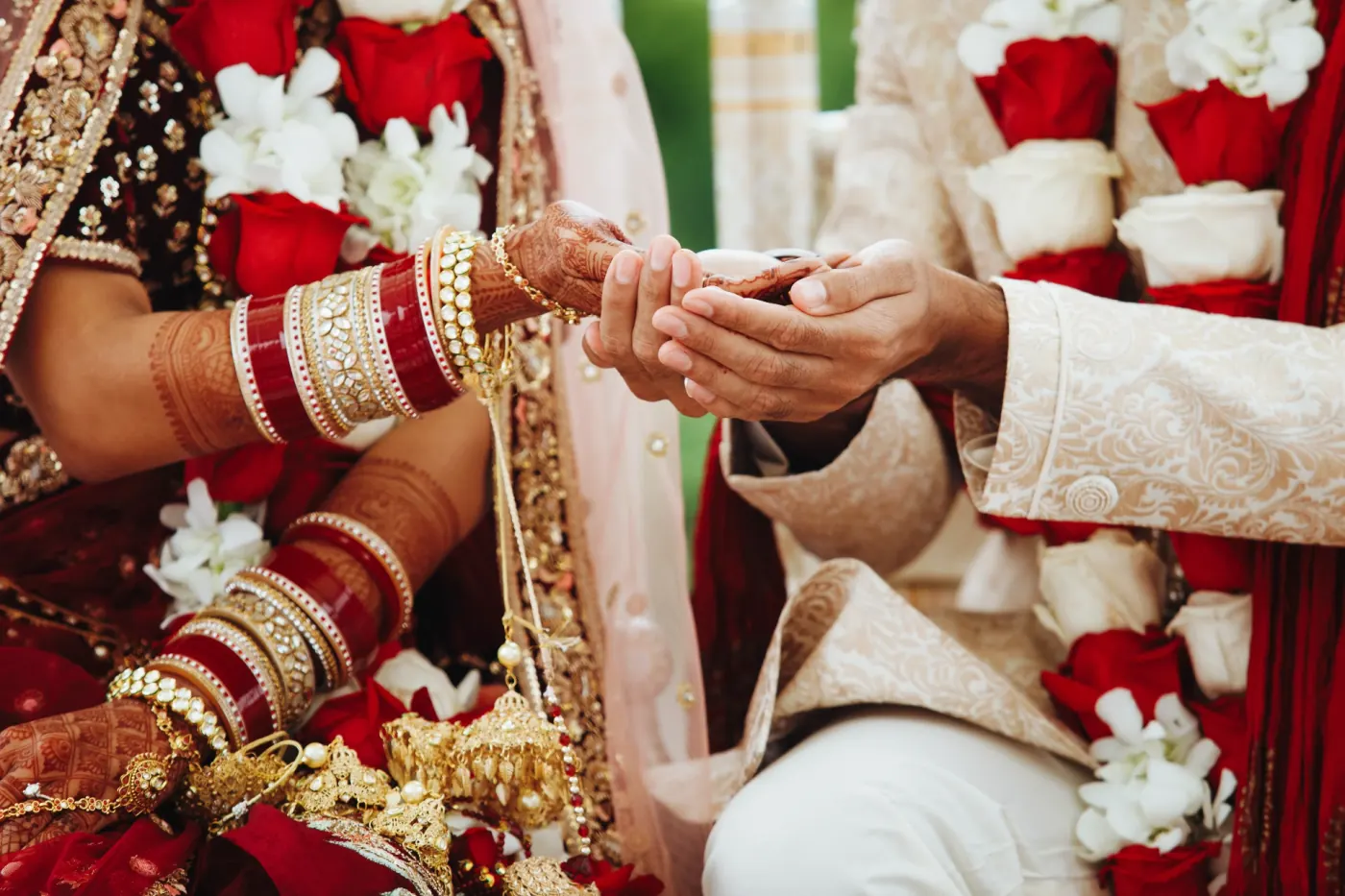
Most international couples marrying in Spain complete the legal formalities in their home country and hold a symbolic or religious ceremony here, which keeps the Spanish side of the process simple. The arrangements that apply to you depend on your nationality and residence, so confirm them early with your planner or a Spanish lawyer rather than assuming. From a catering and production point of view, what matters is the timing the ceremony imposes on the day: a long ceremony pushes the reception late, and the kitchen plan has to be built around that rather than discovered on the day.
Catering in Catalonia
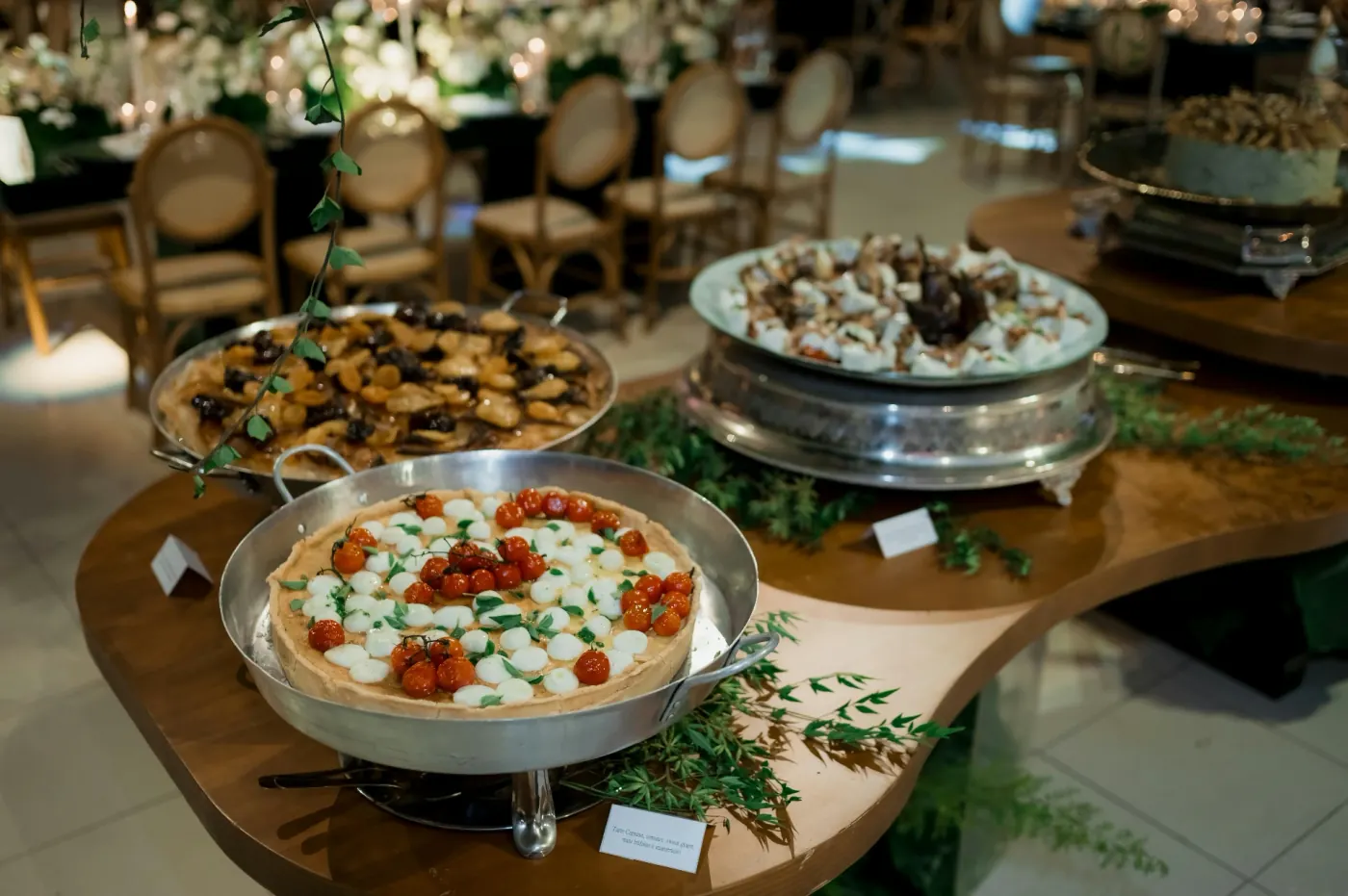
We are based in Seville and travel for Indian weddings across Spain, Catalonia included. Working at that distance is a question of planning rather than difficulty: the brigade, the specialist equipment and the core ingredients travel with us, while fresh produce is sourced locally. What it does require is a longer lead time and a site visit well ahead of the date, so that the kitchen build, the deliveries and the service plan are settled long before anyone arrives.
Building the Guest Experience Around the City
One genuine advantage of Barcelona is what happens between your events. Guests who have flown a long way appreciate having something to do on the days they are not at a celebration, and a city base makes that effortless in a way a remote estate cannot. Many families build the schedule deliberately around it, holding the welcome dinner in the city, the main events at an estate outside, and leaving a free day in between.